
Welcome back to FindWithJ.
Working from home often means switching between focused individual work and virtual meetings throughout the day. The right clothing can help you stay comfortable during everyday work while also creating a more polished appearance when you need to appear on camera.
Rather than choosing formal business clothing for every video call, practical home-work apparel can combine comfort with a neat and presentable look.
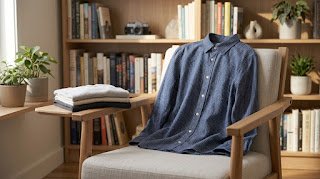
Here are five features worth considering when choosing clothing for remote work and video meetings.
Structure and Collar Detail for Video Meetings
During most video calls, the camera primarily shows your face, shoulders, and upper body. This makes the design of your top particularly noticeable.
Tops with structured collars, neat necklines, or simple layers can create a more polished appearance without requiring formal business clothing.
Tailored knit polos, structured cardigans, modern henleys, and simple crewneck tops are all options worth considering.
When choosing a top for video meetings, pay attention to the fit, neckline, fabric appearance, and how the garment looks under your usual camera and lighting setup.
Camera-Friendly Colors and Fabrics
Certain clothing patterns can be difficult for digital cameras to display clearly. Very fine stripes, dense patterns, and highly reflective fabrics may sometimes create distracting visual effects on camera.
Solid colors and simpler patterns are often easier to work with for video meetings. Matte or non-reflective fabrics can also be useful when working under bright desk lighting.
Instead of choosing clothing based only on how it looks in person, consider how the color, pattern, and fabric appear through your webcam.
Comfortable Indoor Footwear
Although footwear usually remains outside the camera frame, it can still be an important part of an overall work-from-home routine.
If you spend much of the day working indoors, comfortable slippers or indoor shoes may be preferable to going barefoot or wearing outdoor footwear.
When choosing indoor footwear, consider cushioning, fit, breathability, sole flexibility, and the type of flooring in your workspace.
The best choice will depend on your personal comfort and how much time you typically spend standing or sitting during the workday.
Flexible Layering for Changing Temperatures
Indoor temperatures can change throughout the day, particularly when working near windows, heating systems, or air conditioning.
A simple layering system makes it easier to adjust your clothing without interrupting your work. A lightweight base layer paired with a cardigan, zip-up knit, or relaxed blazer can work well for both everyday tasks and video meetings.
Choose layers that are easy to remove and comfortable to wear while sitting for extended periods.
Stretch and Freedom of Movement
Remote work often involves spending long periods sitting at a desk, while video meetings may also require natural hand and upper-body movement.
Clothing with some stretch can provide greater freedom of movement and may feel more comfortable when changing positions throughout the day.
Four-way stretch fabrics are one option, but the amount and type of stretch can vary considerably between garments.
When choosing work-from-home clothing, consider how the material feels when sitting, reaching, and moving rather than focusing only on how it looks when standing.
Creating a Practical Work-from-Home Wardrobe
A work-from-home wardrobe does not need to be as formal as a traditional office wardrobe.
A few comfortable, presentable pieces can make it easier to move between focused work, casual tasks, and video meetings without changing your entire outfit.
Look for clothing that fits your routine, feels comfortable during extended wear, and looks appropriate on camera when needed.
At FindWithJ, we will continue exploring practical products and everyday ideas that can make remote work more comfortable, organized, and convenient.