

As an Amazon Associate, I earn from qualifying purchases. This post contains affiliate links, and I may earn a commission at no extra cost to you. All images are for illustrative purposes only, and actual products and services may differ from those shown.
Welcome back to FindWithJ.
Stretching routines can be complicated, but I prefer to keep mine simple before my morning runs.
In the first two posts of this series, I shared why I started running while working from home and how I use a treadmill when I want a simple indoor option. This time, I want to talk about something that happens before I even start running: getting ready to head outside.
Before most runs, I spend about a minute doing a few light movements, mainly around my ankles and calves, along with a little general movement to get myself ready to go.
That is about it.
This is simply what I currently do before my own short morning runs.
I Like to Keep My Pre-Run Routine Simple
One thing I have learned about myself since starting to run is that complicated preparation can make a simple activity feel like a much bigger project.
My usual runs are only around 20 minutes, often covering somewhere between 2 and 3 kilometers. I normally run two or three times a week, mostly in the morning.
For that kind of routine, I personally do not want to spend a long time preparing.
I want to wake up, get ready, move around for a moment, and head outside.
The fewer steps I put between myself and the front door, the easier it feels to actually go.
This is especially important on workdays.
Once I sit down at my desk and start checking messages or thinking about what I need to accomplish, my attention quickly shifts toward work. That is why I prefer to run before the workday really begins.
A short preparation routine fits naturally into that approach.
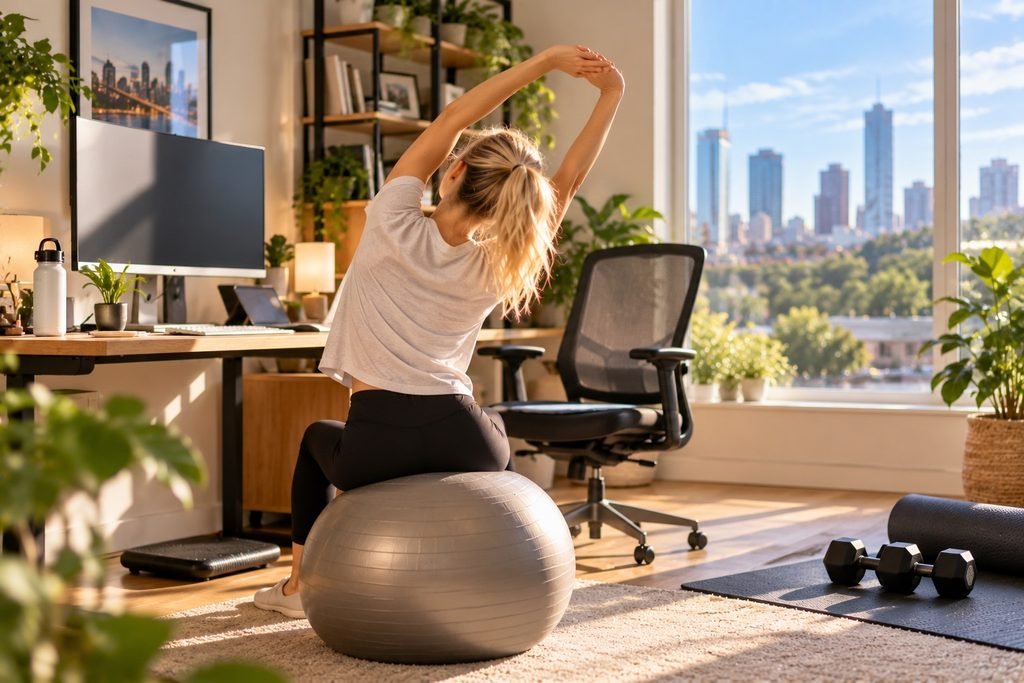
Image for illustrative purposes only
I Usually Start With My Ankles
My ankles are one of the areas I usually move first.
I might gently move or rotate them for a few moments before I run. There is no complicated sequence and I do not count a precise number of repetitions.
I am simply taking a moment to move before heading outside.
Because I spend so much of my work-from-home day sitting at a desk, the transition from being relatively still to going outside for a run can feel fairly abrupt.
My short pre-run routine creates a small transition between the two.
It is also a mental signal.
I put on my shoes, move my ankles, do a few other light movements, and I know that I am about to go outside.
The entire process is simple enough that I barely have to think about it anymore.
I Give My Calves a Little Attention Too
I also spend a little time on my calves.
Again, I keep this very basic.
I am not trying to perform an advanced stretching routine or see how flexible I can become. I just take a short moment to gently move and stretch before I leave.
Combined with the ankle movements and a little general movement, this usually makes up most of my approximately one-minute preparation.
Some days I may spend slightly longer. Other days it really is only about a minute.
I do not use a timer.
The point for me is not to complete a perfectly structured routine. It is simply to avoid going directly from doing very little movement to immediately starting my run without any transition at all.
I Don’t Treat It as a Workout
My pre-run routine is not another workout before the workout.
That distinction is important to me.
I have seen running routines that involve multiple exercises, detailed warm-ups, and carefully planned sequences. There may be good reasons for people to follow those approaches depending on their circumstances and goals.
That just is not what I am doing.
At this stage, I am a casual beginner who usually runs 2 to 3 kilometers.
My goal is to make running a sustainable part of my work-from-home lifestyle rather than turn it into a complicated training project.
So I keep the preparation proportional to the way I currently run.
A little movement around my ankles, a little attention to my calves, some general movement, and then I go.
Keeping It Short Makes It Easier for Me to Start
There is also a practical reason I like such a short routine: I have fewer opportunities to talk myself out of running.
Getting started can sometimes be the hardest part.
On a comfortable morning, going outside is easy. On another morning, staying home with a cup of coffee can sound much more appealing.
If I had created a long list of things I needed to do before every run, I know myself well enough to realize that the preparation itself could eventually become an excuse.
Instead, I try to keep the entire process uncomplicated.
Get dressed.
Put on my shoes.
Move around for about a minute.
Go outside.
Once I am out the door, the hardest decision has already been made.
I’m Still Learning What Works for Me
After about six months of running, I do not pretend to have figured everything out.
My routine may change.
I may eventually run longer distances. I may learn more about warm-ups and decide that I prefer a different approach. Or I may continue doing something very similar to what I do now.
That is part of being a beginner.
For now, I am paying attention to what makes running feel manageable within my actual life rather than trying to create the perfect running routine from the beginning.
That approach has helped me avoid making running feel more intimidating than it needs to be.
I am not training for a race.
I am not trying to become the fastest person on my local path.
I am simply someone who works from home, spends many hours sitting at a desk, and decided about six months ago that running a few times a week was something I wanted to try.
My short preparation routine reflects that simplicity.
A Small Transition Before I Head Outside
I have started to think of this one-minute routine as another small boundary in my work-from-home day.
Just as my morning run creates some separation between waking up and sitting down to work, the few movements I do beforehand create a transition between being at home and heading outside.
It is a very small ritual.
But small routines can be easier for me to repeat because they do not require much planning.
I do not need special equipment. I do not need a large amount of space. And I do not need to turn the preparation into a separate project.
I just give myself a short moment to move before I start running.
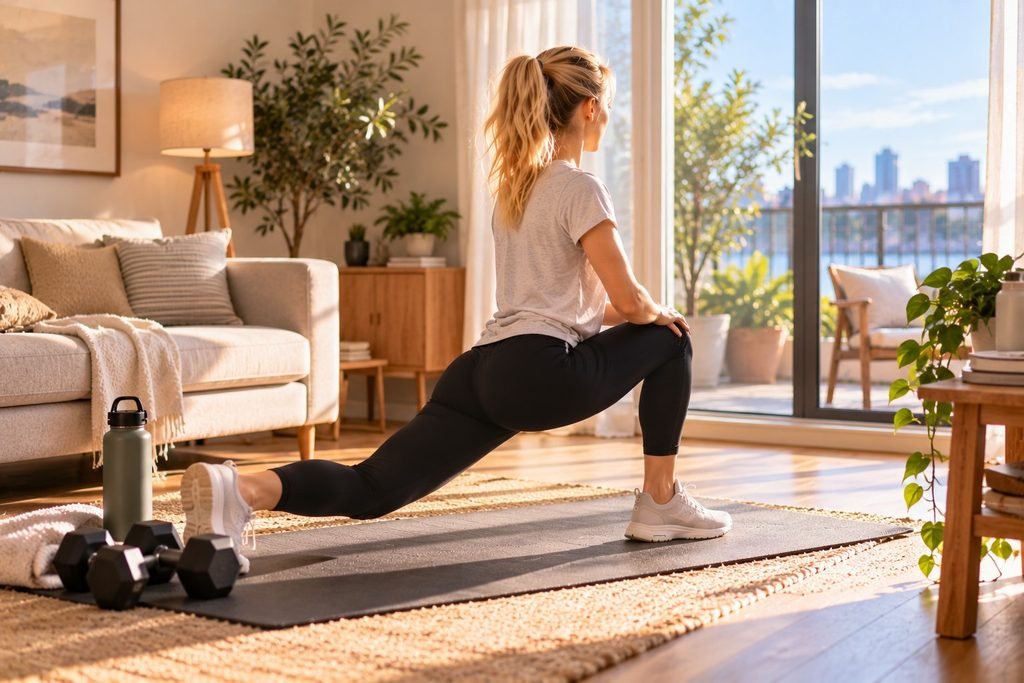
Image for illustrative purposes only
Simple Is Enough for Me Right Now
As a beginner, I sometimes have to remind myself that I do not need to copy everything experienced runners do.
My running routine can reflect where I am right now.
At the moment, that means short runs two or three times a week, changing my outdoor routes, and spending about a minute doing some light movement before I leave.
It may evolve as I gain more experience.
For now, however, I like the fact that the whole process remains easy to understand and easy to fit into my morning.
There is no long checklist waiting for me.
There is just a pair of comfortable shoes, about a minute of preparation, and the decision to step outside.
And for the kind of runner I am right now, that feels like enough.
Three Stretching Straps Worth Considering
For now, I am happy keeping my pre-run routine simple and equipment-free. I usually spend about a minute moving my ankles and calves before heading outside, and that works for the way I currently run.
However, I know that some people prefer using a little extra support or following a more structured stretching routine at home.
For anyone interested in exploring that approach, stretching straps are one option worth considering. They are relatively simple accessories that can be used for different stretching and mobility exercises.
I looked at three options available on Amazon, arranged from lower to higher price based on the listings I reviewed. Each offers slightly different features and may suit different stretching preferences.
1. Trideer Stretching Strap with Loops
👉 Check the Trideer Stretching Strap on Amazon (paid link)
The Trideer Stretching Strap is a non-elastic strap designed for controlled stretching and mobility exercises.
One of its main features is the series of loops along the strap. These provide different hand and foot positions, allowing users to adjust their grip and stretching position without tying knots or adjusting buckles.
Because the material does not stretch, it maintains a consistent length during use.
According to the product description, it can be used for stretching areas such as the calves, hamstrings, hips, and lower back. It is also marketed for physical therapy and mobility assistance.
For someone interested in a straightforward stretching accessory without elastic resistance, this could be an option to consider.
2. Stretching Strap with Loops
👉 Check the Stretching Strap on Amazon (paid link)
The Stretching Strap is another option for people interested in adding a simple accessory to their stretching routine.
This stretching strap features multiple loops for different hand and foot positions. It is marketed for stretching exercises involving areas such as the legs and hamstrings, as well as for mobility assistance.
The loop design may appeal to people who prefer having several grip positions rather than using a traditional strap without loops.
For readers looking for a basic stretching strap with multiple grip options, the Stretching Strap with Loops is another product worth comparing.
3. Yogaevo 2-in-1 Elastic Stretching Strap
👉 Check the Yogaevo 2-in-1 Stretching Strap on Amazon (paid link)
The Yogaevo 2-in-1 Elastic Stretching Strap offers something a little different from the first two options.
Unlike a non-elastic stretching strap, this one is designed with elastic resistance.
According to the product description, it can be used for stretching as well as resistance exercises, making it a more versatile option for people who enjoy different types of movement at home.
It features ten loops, a soft cotton-blend material, and a washable design.
The product also includes access to instructional videos and an illustrated exercise guide, which may be useful for beginners who prefer having examples to follow.
For someone interested in both stretching and light resistance exercises, the Yogaevo may be worth a look.
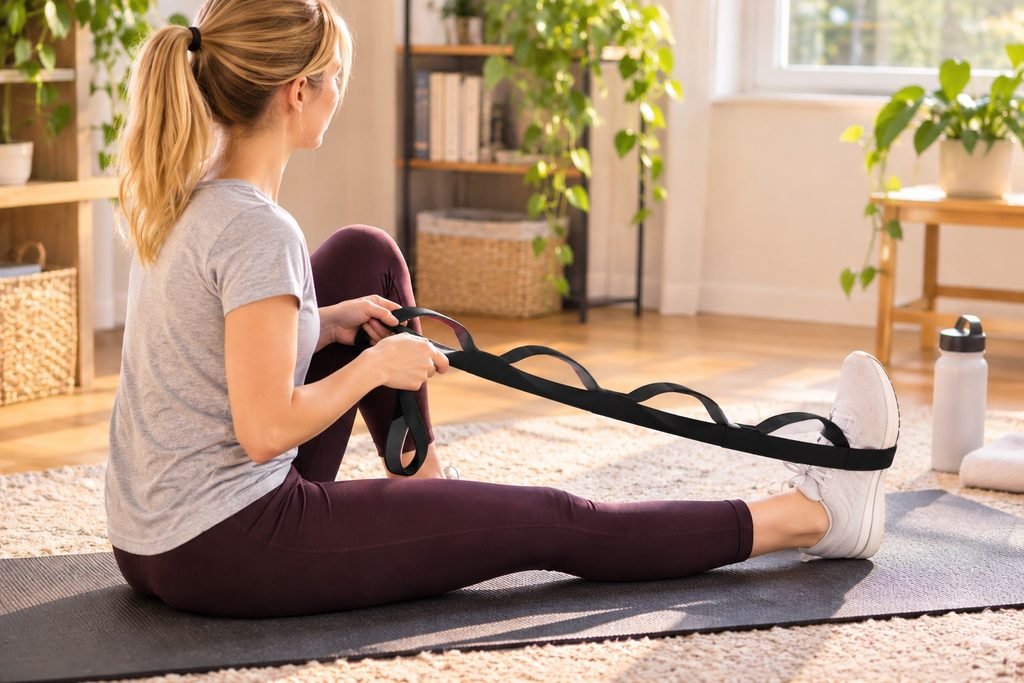
Image for illustrative purposes only
Keeping My Own Routine Simple
Although I do not currently use any of these stretching straps as part of my pre-run routine, I wanted to include them for readers who may prefer a more structured approach to stretching.
Since my own routine involves simple ankle and calf movements, I thought these products might be worth exploring for anyone interested in additional stretching options at home.
For now, I am happy keeping my routine equipment-free.
I like the idea that I can put on my running shoes, move around for a short moment, and head outside without having to prepare anything else.
Still, I understand that other people may prefer using a strap or following a more structured stretching routine.
As I gain more running experience, my own approach may change. But right now, keeping things simple makes it easier for me to stay consistent.
In the next post in this series, I’ll talk about another area where I prefer to keep things simple: running gear. I do not use a large collection of specialized equipment. Most of the time, I just wear comfortable clothes and shoes and head outside.
Disclaimer: This post describes my personal running routine and experience only. It is not intended as medical, fitness, or injury-prevention advice. Individual exercise needs can vary.